
A fresh, well maintained workplace says a lot about a business, but most organisations cannot simply stop operating while decorating work takes place.
Good commercial decorators understand that the finish matters, but so does the way the work is planned, contained and completed around everyday activity.
Planning the work around how the business operates
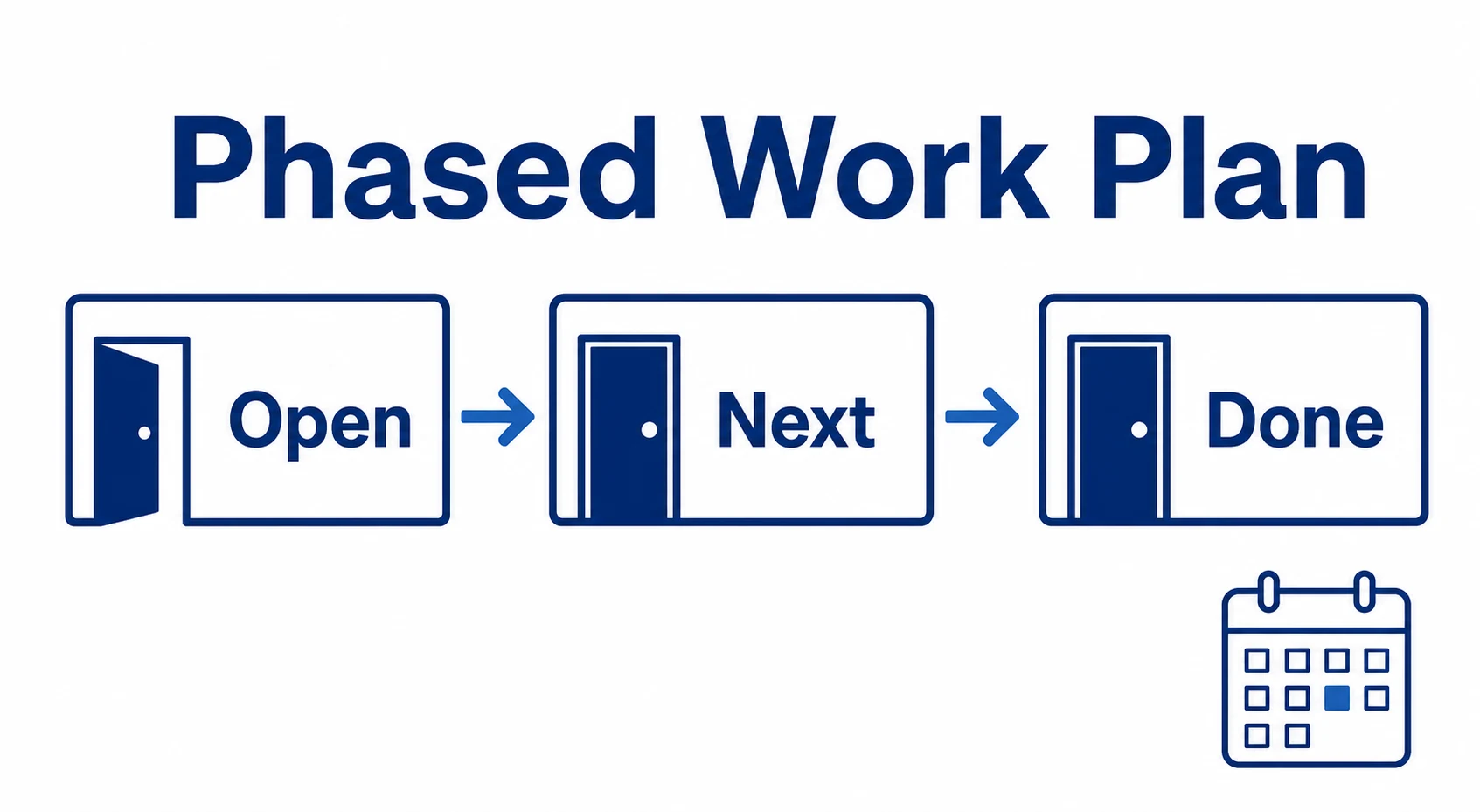
The first step in keeping disruption low is understanding how the space is used. A professional decorating team will look at opening hours, staff movement, customer access, deliveries, meetings, cleaning routines and any areas that cannot be out of use during the day.
This planning stage helps decide the order of work. A reception area may need to be completed in short stages. Corridors may need a clear route maintained at all times. Offices may be grouped so teams can move temporarily without the whole workplace feeling unsettled.
For many businesses, the best approach is phased decorating. Instead of treating the building as one large project, decorators divide it into manageable sections. Each section can be prepared, painted and returned to use before the next area begins. This keeps the workplace organised and gives staff a clear sense of what is happening.
It also helps to agree practical details before work starts. These include where materials will be stored, which entrances decorators should use, how waste will be removed and who signs off each completed area. Small decisions like these make a big difference once the project is underway.
If you are arranging workplace repainting, SB Decorations’ commercial painting service is the natural place to start for this type of planned interior work.
Preparation protects the workplace before paint is opened

Most disruption is avoided before the first coat goes on. Careful preparation protects furniture, flooring, equipment and the working rhythm of the business.
Professional decorators will usually begin by clearing or moving items where practical. Desks, chairs, shelving and loose objects may be shifted away from walls. Where items cannot be moved, they should be covered securely. Flooring is protected with dust sheets or suitable coverings, with attention paid to walkways and doorways where people are still passing through.
Masking is another important part of tidy commercial decorating. Edges around sockets, switches, skirting, frames, glazing and fixed fittings need care. Good masking does not just create cleaner lines, it also reduces the chance of accidental marks on surfaces that are not being decorated.
Surface preparation is just as important. Walls, trim and previously painted areas may need cleaning, sanding, filling or spot priming depending on condition. Doing this properly helps the new finish look even and last well. It can also prevent delays later, because problems are dealt with before coatings are applied.
For active workplaces, preparation should be controlled and tidy. Dust, tools and materials should not spread through the building. A well organised team will keep work areas contained, clean as they go and leave routes usable where agreed.
Keeping work areas clean, safe and clearly separated
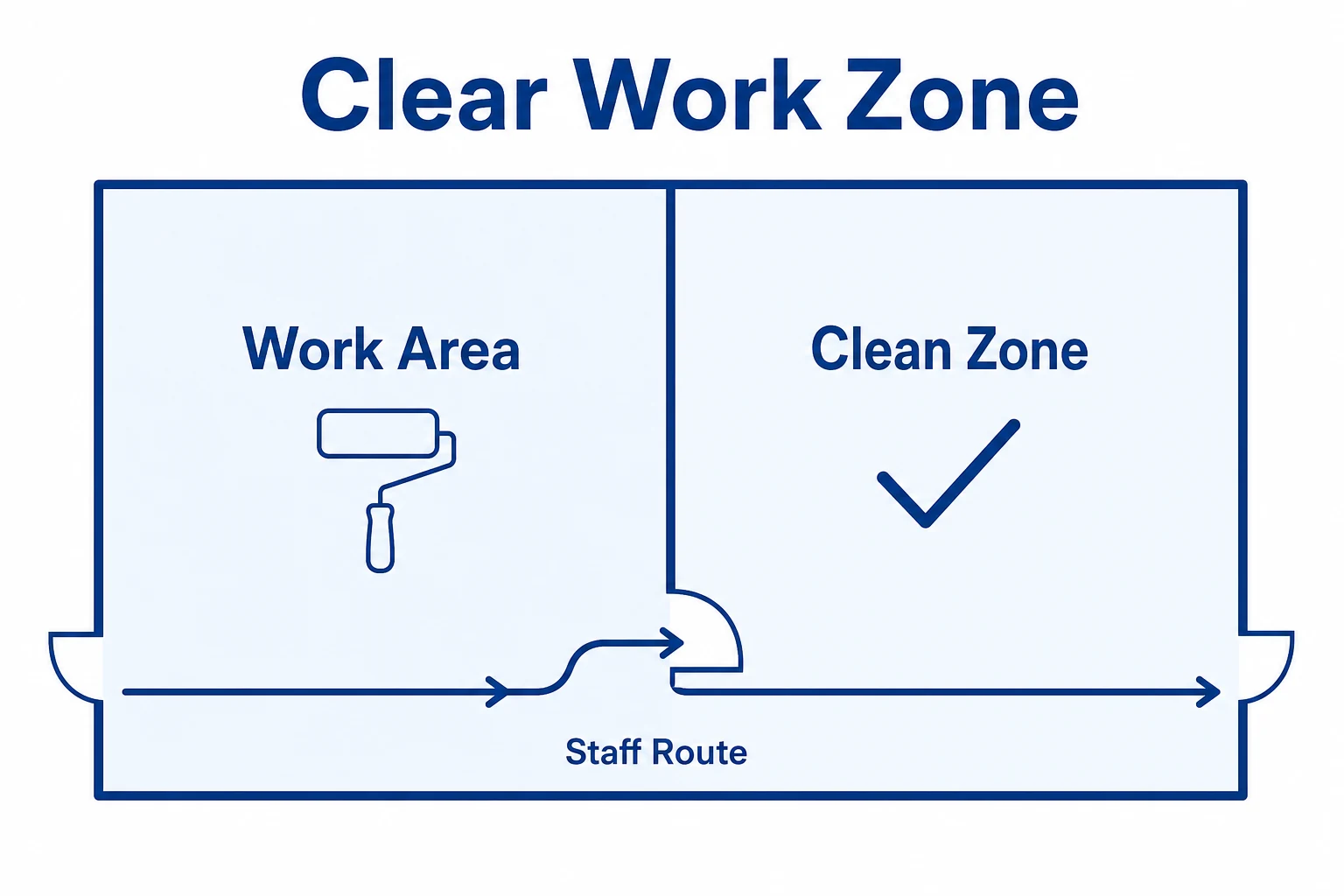
In a live workplace, the decorating area has to be obvious. Staff and visitors should be able to see which spaces are in use and which are being worked on. This is not about making the project feel intrusive. It is about making the building easy to navigate while work continues.
Clear separation can be achieved with sensible positioning of tools, coverings and signs where required. Ladders, trays, rollers and materials should be placed so they do not block agreed routes. Cables and equipment should be managed carefully. Wet paint areas should be protected from accidental contact.
Cleanliness is also part of disruption control. A commercial decorator should not leave dust sheets bunched in walkways, open tins in busy areas or tools scattered where staff need to move. At the end of each shift, the area should be left in a predictable condition, especially if staff will return before the next stage begins.
This matters in customer facing settings too. Even when work is taking place, the business still needs to feel professional. A tidy decorating team helps protect that impression by keeping the site orderly and respecting the people using the space.
Where a project includes both commercial and general interior work, it can help to compare the approach with SB Decorations’ wider painting services, especially when planning several rooms or finishes.
Choosing suitable products and timing each coat well
Low disruption decorating is not only about when people are in the building. It is also about choosing appropriate materials and allowing each stage to happen in the right order.
Commercial interiors often have different demands across different areas. A meeting room may need a smart, calm finish. A corridor may need something more durable because it receives regular contact. Skirting, doors and trim may need a finish that stands up to cleaning. A professional decorator can advise on practical options without overcomplicating the specification.
Drying and curing times should also be planned carefully. Even when a surface feels dry, it may still need sensible treatment before furniture is pushed back or regular use resumes. Timing coats properly helps avoid marks, uneven sheen or unnecessary touching up.
Ventilation is another practical consideration. Decorators should think about air movement, comfort and how the space will be used after work is completed. In some settings, it may be best to complete certain coats outside busy periods so rooms can be returned to use in a calm and orderly way.
The aim is simple. The decorating work should support the business, not fight against its routine. Good sequencing helps the finish look better and helps the people in the building carry on with less interruption.
Communication keeps everyone confident

Even a well planned decorating project can feel disruptive if people do not know what is happening. Clear communication is one of the simplest ways to keep a workplace settled.
Before work begins, staff should know which areas will be affected and when. They should also know whether anything needs to be moved, whether access will change and who to speak to with practical questions. This does not need to be complicated. A clear schedule and a reliable point of contact are often enough.
During the work, decorators should flag changes early. If an area needs extra preparation, if drying time affects access or if the order of rooms needs to change, the business should hear about it promptly. Good communication prevents small issues becoming frustrating surprises.
Sign off is part of this process too. Each phase should be checked before the team moves on. This allows any minor snagging to be handled while the work area is still active, rather than leaving the business with a list to chase later.
If several types of decorating are being considered, SB Decorations’ decorating services can help shape the project around the needs of the property and the people using it.
What businesses can do before decorators arrive
A professional team should carry the main responsibility for planning, protection and finish, but businesses can still make the project smoother with a little preparation.
It helps to identify the busiest times of day, any sensitive areas and anything that must remain accessible. Staff can be told in advance so personal items, paperwork and small equipment are moved away from walls. If certain rooms need to be available for meetings or calls, that should be built into the schedule.
It is also useful to decide who will approve colours, finishes and completed sections. Too many voices can slow decisions, while one clear contact keeps things moving. This is especially helpful when work is being phased across several areas.
Finally, think about what the business needs from the space once decorating is complete. A good finish should look smart, feel appropriate for the setting and support daily use. When those priorities are clear, decorators can plan the detail with confidence.
- Commercial decorators reduce disruption by planning work around daily business routines.
- Phased decorating keeps parts of the workplace usable while other areas are completed.
- Preparation, masking and dust sheets protect floors, furniture, fittings and equipment.
- Clean work areas and clear communication help staff and visitors move around confidently.
- Good timing between coats supports a smarter finish and a smoother return to normal use.
Frequently asked questions
Can commercial decorators work while a business stays open?
Yes, in many cases they can. The key is planning the work in phases, keeping routes clear, protecting surfaces properly and agreeing which areas can be worked on at different times.
How do decorators protect an active workplace?
They use careful preparation, dust sheets, masking, controlled storage of materials and tidy working methods. Furniture and fittings are moved or covered where needed, and work areas are kept separate from normal activity.
What should we prepare before commercial painting starts?
Move small items away from walls, confirm access needs, share busy periods with the decorating team and choose one person to approve decisions. This helps the project run smoothly from the first day.
Is phased decorating better for offices and shared spaces?
Often, yes. Phasing allows one area to be completed and returned to use before the next begins, which helps staff continue working with less interruption.
Planning a workplace refresh?
SB Decorations can help plan tidy, professional commercial decorating around the way your business works, with clear preparation and a careful finish.