If you have been comparing paints for woodwork, metal, walls or exterior surfaces, you may have seen the terms solvent-based and oil-based used almost as if they mean the same thing. In everyday decorating talk, they often overlap, but they are not always identical.
Understanding the difference helps you choose a finish that looks right, performs well and suits the surface. It is also one of the reasons a professional painter will look at the material, location, expected wear and existing coating before recommending a product.
What does solvent-based paint mean?
Solvent-based paint is a broad term for paint where the main liquid carrier is an organic solvent rather than water. That solvent keeps the resins, pigments and additives workable in the tin and helps the paint flow onto the surface. As the coating dries, the solvent evaporates and the paint film is left behind.
In practical terms, solvent-based paints are usually associated with a stronger smell during application, longer drying or curing times than many water-based alternatives, and the need for appropriate ventilation. Brushes and rollers normally require a suitable cleaner such as white spirit, depending on the product instructions.
Solvent-based products are often chosen where a hardwearing, smooth or high-adhesion finish is needed. They are common for trim, doors, metalwork, certain primers, specialist coatings and some exterior surfaces. However, the exact performance depends on the formulation, not simply the fact that the paint contains solvent.
So, is solvent-based paint oil-based?
The simplest answer is: many oil-based paints are solvent-based, but not every solvent-based paint is strictly oil-based.
Traditional oil-based paints use oils or alkyd resins as part of the binder system. These are commonly carried in solvent, which is why people often use “oil-based” and “solvent-based” interchangeably. For many household decorating products, especially older-style glosses and undercoats, that shorthand makes sense.
However, solvent-based is the wider category. A coating can be solvent-borne without being described as a traditional oil-based paint. Some specialist coatings use different resin technologies designed for particular surfaces or performance requirements. The product label and technical data sheet will give the clearest answer.
For a homeowner or facilities manager, the more useful question is not only “is it oil-based?” but “is this the right coating for this surface, use and finish?” That is where experienced product selection matters.

Where a professional may recommend solvent-based paint
A professional decorator may recommend a solvent-based product when the surface needs excellent adhesion, a tough finish or a particular look that suits the project. It is commonly considered for areas that receive regular handling, impact or cleaning.
- Interior woodwork: doors, skirting boards, architraves and stair parts may benefit from a durable finish, particularly in busy homes or shared spaces.
- Metal surfaces: railings, frames, pipes and certain fixtures often need primers and topcoats designed to grip well and resist wear.
- Previously coated surfaces: where older coatings are present, compatibility matters. A decorator will assess whether sanding, priming or a specific system is needed.
- High-traffic commercial interiors: some environments need coatings selected for durability and ease of maintenance.
- Specialist finishes: certain primers, stain blockers and protective coatings are solvent-based because of the job they need to do.
Good preparation is just as important as the paint itself. Degreasing, sanding, dust removal, masking and correct priming all help the finish bond properly and look crisp. For broader decorating work, SB Decorations’ professional painting service covers careful product choice as part of a well-planned finish.

When water-based paint may be the better choice
Solvent-based paint is useful, but it is not automatically the best option for every job. Modern water-based paints have improved significantly and are often preferred for walls, ceilings and many interior trim projects. They usually have lower odour, faster recoat times and easier clean-up with water.
For occupied homes, offices and public-facing spaces, quicker drying and reduced smell can be a practical advantage. Water-based products are also available in durable finishes, including washable wall paints and modern trim paints with good resistance to everyday wear.
The decision often comes down to balance. A decorator will think about the surface, the existing coating, how soon the room needs to be used, the desired sheen level and the level of wear expected. In some projects, the best specification may include both types: for example, a water-based wall finish with a specialist primer or a tougher coating on selected details.
For larger workspaces, a planned specification can help keep the finish consistent across different areas. If you are reviewing a workplace project, commercial painting support can help with practical coating choices for presentation, durability and maintenance.
How painters choose the right coating
A good painter does not choose paint by habit alone. The right product is selected after checking the surface, the environment and the finish required. This is especially important where solvent-based and water-based systems might interact.
Key considerations include the condition of the existing coating, whether it is glossy or chalky, whether there are stains or knots, how much movement the surface may have, and whether the area is exposed to moisture, heat or heavy contact. The painter will also consider manufacturer guidance on primers, recoat windows and curing.
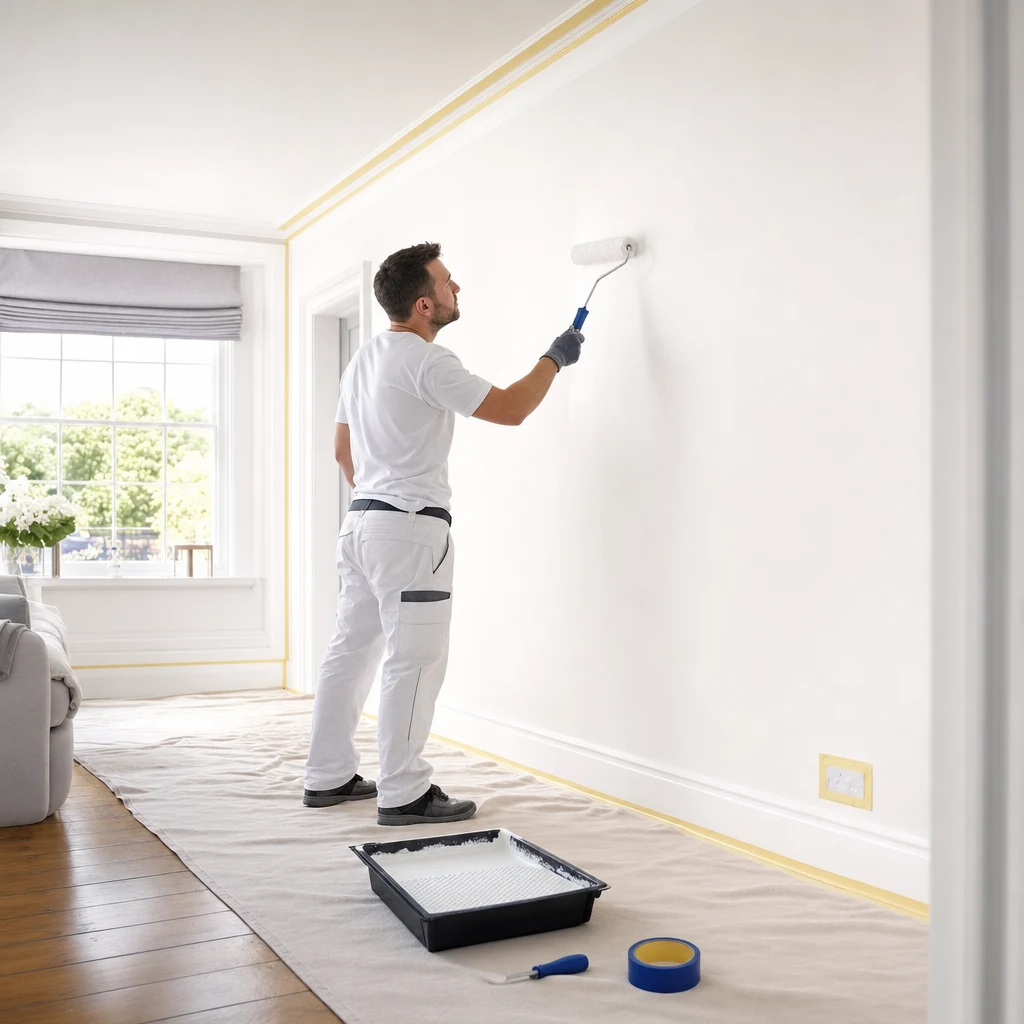
Preparation helps prevent common issues such as peeling, poor coverage, visible brush marks or premature wear. Professional decorators use appropriate abrasives, dust sheets, masking tape, brushes, rollers and primers to create a clean, controlled working area and a neat finish.
If you are unsure what has already been used on your woodwork or walls, avoid guessing. A professional can test, inspect and recommend a compatible system. SB Decorations also covers a range of areas, and you can view the locations served if you are planning a decorating project.

Common misconceptions about solvent-based paint
One common misconception is that solvent-based paint is always stronger. Some solvent-based coatings are extremely durable, but some modern water-based paints are also highly capable. Durability depends on the full formulation, preparation and suitability for the surface.
Another misconception is that oil-based paint always gives the best finish. Traditional oil-based gloss can level beautifully, but modern alternatives can also produce sharp, smooth results in skilled hands. Application technique, brush choice, roller choice and drying conditions all affect the final look.
It is also worth noting that solvent-based coatings need sensible handling. Ventilation, drying time, disposal and cleaning should follow the manufacturer’s instructions. A professional decorator will plan around these factors so the work is carried out neatly and safely.
Finally, do not assume you can apply any paint over any previous finish. Compatibility is one of the biggest reasons to get advice. The right primer or preparation method can make the difference between a finish that simply looks good on day one and one that continues to perform well.
- Solvent-based paint uses an organic solvent as the carrier, while oil-based paint is usually a type of solvent-based coating.
- Not all solvent-based paints are traditional oil-based paints; the resin system and product data matter.
- Solvent-based products can be useful for durable trim, metalwork, primers and specialist coatings.
- Modern water-based paints may be better for low odour, quicker drying and many interior wall or trim projects.
- A professional painter will choose based on surface condition, compatibility, use and desired finish.
Frequently asked questions
Can I paint water-based paint over solvent-based paint?
Often, yes, but the surface normally needs proper cleaning, sanding and sometimes a suitable primer. Glossy or old coatings should not be painted over without preparation.
Does solvent-based paint always smell stronger?
It usually has a more noticeable odour than water-based paint because solvents evaporate as it dries. Good ventilation and following the product guidance are important.
Is oil-based paint better for skirting boards?
It can be a good option where a tough, smooth finish is required, but modern water-based trim paints may also perform very well. The best choice depends on the existing coating, wear level and finish you want.
How can I tell what paint is already on a surface?
It is not always obvious by sight alone. A decorator can assess the coating, test adhesion and recommend a compatible preparation and paint system.
Need help choosing the right paint?
If you are planning a decorating project and want a clean, durable finish, SB Decorations can advise on suitable paints and preparation.