
You spot a crack, a dent, or a rough patch on the wall and it’s tempting to reach for a tub of filler. Fair enough. Sometimes that’s exactly the right move.
But other times, that “quick fix” looks good for a few weeks… then the crack returns, the patch sinks, or the paint starts looking oddly patchy in certain light. If that’s happened to you, it’s not just bad luck. It’s usually the wall telling you it needed a different kind of repair.
In this post, we’ll break down the difference between filler and plaster repair, how to spot which one you actually need, and why the right prep matters so much before you decorate.
Plaster vs filler: what’s the difference?
Filler is mainly for small, shallow surface imperfections. It’s designed to smooth, level, and tidy up minor marks so your wall looks neat again.
Plaster repair is what you need when the wall or ceiling has deeper damage, loose areas, or a surface that isn’t properly sound anymore. It’s less about “smoothing over” and more about rebuilding and stabilising.
A simple way to think about it: filler is a cosmetic fix. Plaster repair is a structural fix for the surface itself. They overlap a bit, but they are not interchangeable.
When filler is actually the right choice
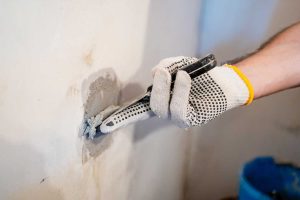 Filler gets unfairly criticised sometimes. Used in the right place, it can last for years and saves you from unnecessary work.
Filler is usually suitable for:
- Small picture hook holes and tiny screw holes
- Light dents and scuffs where the wall underneath is solid
- Very small chips on corners (as long as the edge is still firm)
- Minor surface scratches that just need levelling before painting
If the surface is firm, dry, and not crumbling, a filler repair may be all you need before redecorating.
When a “quick fix” won’t last
This is where most frustrations come from. You fill a crack, sand it back, paint the wall… and the line reappears. Or worse, the patch becomes obvious the moment the sun hits it.
Here are a few common reasons filler repairs fail:
1) The wall is moving
Not in a dramatic, scary way in most cases, but everyday movement is real. Doors slamming, vibrations through staircases, seasonal changes, even just an older house settling. If the crack is caused by movement, filler alone may not cope for long.
2) The repair is too deep for filler
Some fillers are fine in slightly deeper areas, but thick applications can shrink, crack, or lose grip. If you’re trying to build up a missing chunk or level a deeper hollow, plaster repair is often the better route.
3) The surface underneath isn’t sound
This is a big one. If you’re filling over dust, flaking paint, or crumbling plaster, the filler is only as strong as what it’s sticking to (which may be not much at all).
4) There’s a moisture history
Previous leaks, old water marks, or persistent condensation can weaken plaster and spoil paint finishes. Even once the leak is sorted, the wall might still need the right repair and sealing before you redecorate.
5) The wall looks “fine”… until you paint it
Some repairs only show up after decorating, especially with darker colours, modern matt finishes, or rooms with downlights. A patch can be perfectly smooth to the touch and still look slightly different once painted if it hasn’t been properly prepared.
Quick checks: does it look like a plaster repair job?
You don’t need to be an expert to spot a few warning signs. If you notice one or more of the following, it’s often a hint the issue goes beyond simple filler:
- The area sounds hollow when lightly tapped
- The surface powders or crumbles when rubbed
- Cracks keep reappearing in the same place
- The wall or ceiling looks slightly bowed, bubbled, or uneven
- Paint is peeling or blistering around the damaged area
- There’s a stain or mark from an old leak
As a rule of thumb, if you’ve already filled it once (or twice) and it still comes back, it’s probably not a filler problem anymore.
What a longer lasting repair usually involves
We won’t do a step by step guide here (every wall behaves differently), but it helps to know what “doing it properly” tends to include.
A lasting repair usually means:
- Removing loose or blown material back to a solid edge
- Making sure the surface is stable and properly keyed
- Reinforcing where needed (especially over recurring cracks)
- Building the surface back up in layers and blending the edges
- Allowing the repair to dry correctly before finishing
- Preparing it so it’s paint ready and doesn’t flash through
That last point matters more than most people expect. A wall can be “flat” but still not “finish ready”. That’s when you get patchiness, texture differences, or visible repair outlines after painting.
Why plaster issues show up after painting or wallpapering
Painting and wallpapering tend to highlight everything. Even a slight difference in porosity (how the surface absorbs paint) can make a repair stand out. Lighting makes it worse, too. A wall that looks fine on a cloudy day can suddenly show every ripple when the sun hits it from the side.
This is why plaster repair and decorating really should be treated as one job, not two separate “we’ll deal with it later” tasks. If the base isn’t right, the finish can only look so good, no matter how careful you are with the paint.
Real world examples we see all the time
A ceiling crack that reappears every winter
It gets filled, painted, disappears… then returns when temperatures drop and the house shifts slightly. That’s usually a sign the crack needs stabilising properly, not just smoothing over.
A chased in cable line that sinks over time
The wall looks perfect at first. Months later, you can see the line faintly through the paint because the fill has shrunk or the base wasn’t prepared correctly.
A corner that chips again and again
Often it’s because the corner underneath is already weak or hollow. You can tidy it up, but if it’s not rebuilt on a firm base, it’s likely to fail again with everyday knocks.
A stain that “comes back” through fresh paint
Even after repainting, marks can bleed through if the area hasn’t been repaired and sealed properly. It’s annoying, but very common after old water damage.
When it’s worth bringing in a professional
If the damage is small and clearly superficial, filler may be all that’s needed. But if you’re dealing with recurring cracks, blown plaster, ceiling issues, or anything that’s been affected by moisture, it’s usually worth getting it assessed properly.
At SB Decorations, we handle plaster repair alongside painting and decorating, which means the goal isn’t just “make it look OK today”. It’s to leave you with a stable surface that finishes cleanly and stays looking right.
We’re a Cambridge based, family run team with decades of experience, and we cover Cambridge and surrounding areas across Cambridgeshire and East Anglia (including places like Trumpington, Newnham, Shelford, Royston, and Haverhill).
Need a plaster repair sorting before you redecorate?
If you’ve got a wall or ceiling that keeps cracking, looks hollow, or just never seems to paint nicely, we can help. Get in touch with us and we’ll point you in the right direction.